Search This Blog

June 29, 2011

Italian banks under pressure

Morgan Stanley is reporting an explanation on why recently Italian banks seem to be at the center of the interest of speculators. Italian banks are accounting for the three most active positions in Goldman's Dark Pool. For the second day in a row, the most actives continue to be UniCredit and Banca Monte dei Paschi di Siena (Intesa has fallen from 3rd to 12):

There are some speculations in the local papers that the disagreement between PM Berlusconi and Finance Minister Tremonti has reached a new peak again and that Tremonti may threaten to resign again and this time Berlusconi may be prepared to accept.

Given Mr Tremonti stronger reputation (and Berlusconi's weaker stance esp in the international community), if confirmed this is clearly not helpful for Italy especially at this very sensitive moment

The same papers also indicate that Bini Smaghi (who has to resign from his post as ECB board member given Draghi's appointment) could be appointed should Tremonti go (and he would be a well respected high level appoiontment)

None of this is confirmed and it is not obvious even whether Tremonti would resign, but the uncertainty in itself at a very difficult moment for the sovereign (and the already not very stable political situation in Italy) is not helpful for the market in my view. This comes after Moodys changed outlook for Italy to negative last week

We have seen macro funds (esp credit but also equity) effectively selling Italy since Friday (both on stand-lone concerns for the sovereign) but also as a way to position more negatively on Southern Europe

Italian banks have been significantly impacted recently and some show cheap values (ISP for example which is fully recap'd to 10% CT1 but trades below 0.8x NAV), but I would just be reluctant to get involved as yet as the situation unfolds in Italy but also in Southern Europe, as this is still very fluid. And I think the way bank stocks traded today (with Italians in the red in a green screen) tells me that investors are cautious too.

June 28, 2011

Greece austerity package

Below a full breakdown of the actual proposed fiscal measures to be implemented if the austerity vote passes tomorrow, courtesy of the BBC.
The plan involves cutting 14.32bn euros ($20.50bn; £12.82bn) of public spending, while raising 14.09bn euros in taxes over five years.

These are some of the austerity measures planned.


TAXATION
  •     Taxes will increase by 2.32bn euros this year, with additional taxes of 3.38bn euros in 2012, 152m euros in 2013 and 699m euros in 2014.
  •     A solidarity levy of between 1% and 5% of income will be levied on households to raise 1.38bn euros.
  •     The tax-free threshold for income tax will be lowered from 12,000 to 8,000 euros.
  •     There will be higher property taxes
  •     VAT rates are to rise: the 19% rate will increase to 23%, 11% becomes 13%, and 5.5% will increase to 6.5%.
  •     The VAT rate for restaurants and bars will rise to 23% from 13%.
  •     Luxury levies will be introduced on yachts, pools and cars.
  •     Some tax exemptions will be scrapped
  •     Excise taxes on fuel, cigarettes and alcohol will rise by one third.
  •     Special levies on profitable firms, high-value properties and people with high incomes will be introduced.
PUBLIC SECTOR CUTS
  • The public sector wage bill will be cut by 770m euros in 2011, 600m euros in 2012, 448m euros in 2013, 300m euros in 2014 and 71m euros in 2015.
  • Nominal public sector wages will be cut by 15%.
  • Wages of employees of state-owned enterprises will be cut by 30% and there will be a cap on wages and bonuses.
  • All temporary contracts for public sector workers will be terminated.
  • Only one in 10 civil servants retiring this year will be replaced and only one in 5 in coming years.
SPENDING CUTS
  • Defence spending will be cut by 200m euros in 2012, and by 333m euros each year from 2013 to 2015.
  • Health spending will be cut by 310m euros this year and a further 1.81bn euros in 2012-2015, mainly by lowering regulated prices for drugs.
  • Public investment will be cut by 850m euros this year.
  • Subsidies for local government will be reduced.
  • Education spending will be cut by closing or merging 1,976 schools.
CUTTING BENEFITS
  • Social security will be cut by 1.09bn euros this year, 1.28bn euros in 2012, 1.03bn euros in 2013, 1.01bn euros in 2014 and 700m euros in 2015.
  • There will be more means-testing and some benefits will be cut.
  • The government hopes to collect more social security contributions by cracking down on evasion and undeclared work.
  • The statutory retirement age will be raised to 65, 40 years of work will be needed for a full pension and benefits will be linked more closely to lifetime contributions.
PRIVATISATION
  • The government aims to raise 50bn euros from privatisations by 2015, including:
  • Selling stakes this year in the betting monopoly OPAP, the lender Hellenic Postbank, port operators Piraeus Port and Thessaloniki Port as well as Thessaloniki Water.
  • It has agreed to sell 10% of Hellenic Telecom to Deutsche Telekom for about 400m euros.
  • Next year, the government plans to sell stakes in Athens Water, refiner Hellenic Petroleum, electricity utility PPC, lender ATEbank as well as ports, airports, motorway concessions, state land and mining rights.
  • It plans further sales to raise 7bn euros in 2013, 13bn euros in 2014 and 15bn euros in 2015.

June 27, 2011

$20 billion air conditioning bill for US troops

Today, NPR reported a stunning story: Air conditioning in Iraq and Afghanistan costs $20.2 billion annually.
That’s more than NASA’s budget. It’s more than BP has paid so far for damage during the Gulf oil spill. It’s what the G-8 has pledged to help foster new democracies in Egypt and Tunisia.
To power an air conditioner at a remote outpost in land-locked Afghanistan, a gallon of fuel has to be shipped into Karachi, Pakistan, then driven 800 miles over 18 days to Afghanistan on roads that are sometimes little more than “improved goat trails,” [retired Brigadier General Steven] Anderson says. “And you’ve got risks that are associated with moving the fuel almost every mile of the way.”

In 2010, the US spent $165.1 billion in Iraq and Afghanistan, according to the Congressional Research Service. This means roughly 12% of expenditures were on air conditioning.
Fuel is not only a budget breaker, it’s a logistical nightmare that can cost lives. Anderson, who manged operational logistics for Gen. David Patreaus in Iraq, explained the impacts of air conditioning on a commander:

“He literally has to stop his combat operations for two days every two weeks so he can go back and get his fuel. And when he’s gone, the enemy knows he’s gone, and they go right back to where they were before. He has to start his counter-insurgency operations right back at square one.”

Another downplayed nuclear accident: Fort Calhoun, Nebraska

A new hidden nuclear disaster could be in the making in Nebraska. It seems the situation at the Fort Calhoun, Nebraska nuclear power plant is getting of some concern. Missouri River flood waters have penetrated the last ditch water-filled wall, and have surrounded the  containment buildings and other vital areas of a Nebraska nuclear plant.


As Reuters reports:

"The U.S. Nuclear Regulatory Commission (NRC) said the breach in the 2,000-foot (600 meters) inflatable berm around the Fort Calhoun station occurred around 1:25 a.m. local time. More than 2 feet (60 cm) of water rushed in around containment buildings and electrical transformers at the 478-megawatt facility located 20 miles (30 km) north of Omaha."

Naturally, the severity of the situation is being downplayed by the NRC, very much the way Tepco and Japanese authorities pretended the Fukushima situation was under control, until it was uncovered that there had been plant meltdown within hours of the tsunami: "Reactor shutdown cooling and spent-fuel pool cooling were unaffected, the NRC said. The plant, operated by the Omaha Public Power District, has been off line since April for refueling."


More from Reuters:

Crews activated emergency diesel generators after the breach, but restored normal electrical power by Sunday afternoon, the NRC said.

Buildings at the Fort Calhoun plant are watertight, the agency said. It noted that the cause of the berm breach is under investigation.

NRC Chairman Gregory Jaczko and other officials planned to visit the site on Monday.

Jaczko will also visit the Cooper Nuclear Station near Brownville, Nebraska, another facility that has been watched closely with Missouri River waters rising from heavy rains and snow melt.

Spanish banks' 50 billion hole

While everyone is staring at Greece Spain banking system is failing slowly with more losses surfacing today.

Bloomberg reported: "Spanish banks have 50 billion euros ($70.7 billion) in unrecognised problematic real estate assets, El Confidencial reported, citing a report by the Boston Consulting Group. The consulting group estimates that Spanish banks need between 20 billion euros and 30 billion euros in additional capital and that Spain’s bank rescue fund, known as the FROB, could end up taking over 20 percent of the banking industry, El Confidencial added." But not before the second European Stress Test finds that all Cajas, just like last year, are perfectly capitalized, in what will be the latest daily lie out of Europe.

Greece update: Default talks on the media scene

It seems that even before the crucial vote in Athens on Wednesday everyone is already convinced Greece will default, last week Alan Greenspan said in brilliant interview with Charlie Rose that Greece is doomed and today more influential voices are anticipating a default in the coming days.


The risk of contagion in the Eurozone and indeed a global financial contagion remains real. Peripheral European bond markets are under pressure again today with 10 year bond yields in Ireland rising to over 12.1% and to over 11.65% in Portugal.


European leaders are preparing for a default by Greece. The German finance minister, Wolfgang Schaeuble, said yesterday that Europe is preparing "for the worst".

George Soros, Chairman of Soros Fund Management and famous for breaking the Bank of England in 1992, has warned that "we are on the verge of an economic collapse which starts, let's say, in Greece but it could easily spread."


The 80-year-old investor said that the “financial system remains extremely vulnerable."

Soros added that "there are fundamental flaws that need to be corrected."  The core flaw, says Soros, is that the euro is not backed by a political union or joint treasury, so when something goes wrong with a participating country, there is "no provision for correction."

Soros said that it is "probably inevitable" that highly indebted countries will be given a way to quit the euro.


A further obstacle to the bailout has been reported today as German constitutional court in Karlsruhe is about to commence hearings on  a lawsuit contesting the legality of the Greek bailout.
As Athens News reports, "the suit was filed last July by a group of five Eurosceptics led by economist Joachim Starbatty. According to the plaintiffs, the financial help package for Greece runs contrary to article 125 of the EU Treaty - the so-called no-bailout clause - which does not allow the EU or a member state to undertake the responsibility of covering the debts of another member state."

In the meanwhile Greek savers are bracing for the worst and draining banks' accounts.
Today, as part of its Weekly Credit Outlook, Moody's issued for the first time a very stark warning that should the rate of attrition in domestic deposits persist, or accelerate, the results would be disastrous.

From Moody's:

Our discussions with rated Greek banks last week and public information lead us to estimate that private-sector customer deposit outflows in the banking system amount to around 8% since the beginning of 2011, which is a key credit negative for Greek banks. The potential for further deposit outflows constitutes a major liquidity risk for banks as depositor sentiment is affected by negative political developments and Greece’s capability for timely repayment of its debt obligations. We expect Greek banks to find it increasingly challenging to lower their dependence on ECB repo funding as deposit balances continue to decline.
Private-sector deposits have been declining since late 2009, while outflows in May and June accelerated, as shown in the exhibit below. Greece’s heated political tensions (government reshuffling and resistance to the new austerity package) and the uncertainties regarding the Troika’s (European Union, European Central Bank, and International Monetary Fund) commitment to continue funding support to Greece are driving deposits elsewhere.


And if push come to shovel and Greece should default the question would be how much and who is going to lose.
Some interesting articles today have been raising scary scenarios:

As Louise Story wrote in the NY Times,
“It’s the $616 billion question: Does the euro crisis have a hidden A.I.G.? No one seems to be sure, in large part because the world of derivatives is so murky. But the possibility that some company out there may have insured billions of dollars of European debt has added a new tension to the sovereign default debate... The looming uncertainties are whether these contracts — which insure against possibilities like a Greek default — are concentrated in the hands of a few companies, and if these companies will be able to pay out billions of dollars to cover losses during a default.” (Derivatives Cloud the Possible Fallout From a Greek Default)


Travel Photo: Quebec City, Canada

Quebec City, Canada

June 26, 2011

Peak Oil impact on the economy

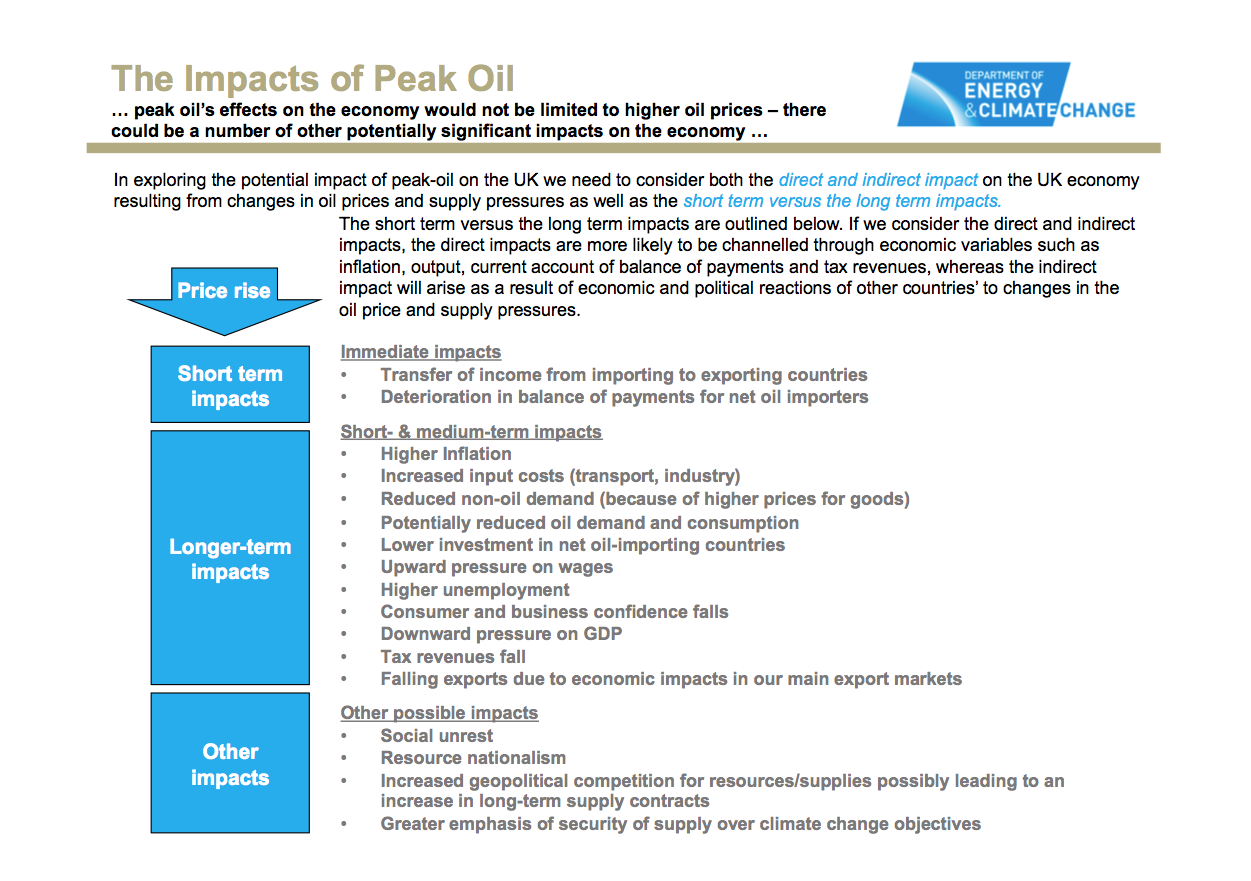
The Guardian has released an internal UK government report on peak oil.
UK government 2 years ago ignored warnings about Peak Oil and played them down as alarmist and irrelevant. The report was eventually released under a Freedom of Information Act (FOIA) request:

The best analysis of this report has been published by The Oil Drum:

Of the 17 bullet points on the slide, 16 have come to pass in the UK and in the neighbouring countries of Europe (click on slide to enlarge and open in separate window). Given that the research was conducted in 2007 and the report compiled in 2009, this conveys amazing insight.

Two important items are missing from the list and when these are taken on board, the story is complete.
1. Peak oil may threaten the global banking and financial system since the Ponzi scheme of growth based on credit expansion requires a growing stream of cheap energy to fuel the real economy. When the stream of cheap fuel dried up, the real economy failed, toppling the global fractional reserve banking system that lay at the heart of the Ponzi scheme. Fractional reserve banking has now been supplemented by Quantitative Easing as a means of creating money to drive consumption of finite reserves.
2. Peak oil will threaten pensions since these are based upon the excess net energy produced from high ERoEI energy sources (Energy Return on Energy Invested). As the ERoEI declines and the lifeblood of cheap net energy dries up, it is inevitable that society's ability to care for those not in work (young, old and dysfunctional) will be steadily eroded. This links to point 1 above via declining stock market valuations.
It seems that the global economy may be on the rocks again for the second time in three years, stemming from energy prices that society can ill afford to pay.

Greece and the Eurozone Russian Roulette

A key week is starting tomorrow for Greece and regardless of the decisions that will take place in Athens the situation in the Eurozone is deteriorating by the day.
The reality is that Greece should have defaulted in May 2010 and avoid an austerity torture that is destroying the country and dragging the Euro to hell.

Had the May 2010 deal provided for debt writedown, the Greek crisis would be over by now. The crises in Ireland and Portugal would probably have happened anyway but would have been easier to handle and the European sovereign debt market would surely be less fragile.
Greece, Ireland and Portugal are small countries and a major disaster can be averted if the debt meltdown can be confined to these three. But if Spain goes under, threatening next-in-line Italy, the world financial crisis will enter a new and potentially disastrous phase.
There is a dangerous divide in the Eurozone which has been getting bigger in the last years and is widening up rapidly. While Ireland has some hope to get out of this mess thanks to its offshore companies' production provided will be able to disentangle itself from the burden of the irish banking system; the situation is appalling in Spain, Greece and Italy.


On Friday, the yield on Irish 10-year bonds reached 12 per cent, the highest level yet seen, with Portugal not far behind. But more ominously, yields on Spanish 10-year bonds have been creeping up and reached 5.7 per cent on Friday.
Ten-year yields for Italy, Europe's largest bond market, have shot back up towards five per cent, close to the danger zone, and one of the ratings agencies (Moody's) has threatened a downgrade.
There is a high risk of accident in the Spanish or Italian bond markets, or of an unexpected bank failure or a government collapsing somewhere. On Friday, Bank of England governor Mervyn King put it: "Providing liquidity can only be used to buy time."
As for the ECB we are not sure if they are trying to save the situation or complicate it.
Last week's Irish edition of The Sunday Times, quoted an unnamed ECB official saying: "In the meantime, we may have to come to the conclusion that it doesn't really make sense for the ECB to keep putting €100bn into Irish banks. What we are doing is actually illegal, but we have being doing it because we want to help Ireland. Maybe we might come to the conclusion that we should stop."

Der Spiegel pointed out correctly:


If the rest of Europe abandons Greece, the crisis could spin out of control, spreading from one weak euro-zone country to the next. Investors would have no guarantees that Europe would not withdraw its support from Portugal or Ireland, if push came to shove, and they would sell their government bonds. The prices of these bonds would fall and risk premiums would go up. Then these countries would only be able to drum up fresh capital by paying high interest rates, which would only augment their existing budget problems. It's possible that they would no longer be able to raise any money at all, in which case they would become insolvent.


And the cash is running out fast, disturbing news last week on the liquidity of European banks is that the number of banks tendering for ECB liquidity surged to 353: higher by 118 from the week earlier as the liquidity contagion spreads, the highest since September 2008, when 371 banks were rushing to suckle at the ECB's teat.

In the meanwhile Labour Unions in Greece decided to cut another 0.15% from Greek GDP by doing absolutely nothing. As a result, as Athens News reports, "according to the General Confederation of Workers of Greece (GSEE) and the civil servants' umbrella federation Adedy, the 48-hour strike is an escalation of their recent industrial action comprising 24-hour nationwide strikes in protest of the medium-term programme. A main demonstration will be held on Tuesday, June 28, at the Pedion tou Areos park in central Athens at 11am, while on Wednesday another demonstration will be held in downtown Klafthmonos Square."
As a reminder June 28, is the far more critical Greece austerity vote, which unlike the vote of confidence already has several PASOK members saying they will vote against it. 


This could explain why Le Figaro reports today that a working group of French banks led by BNP Paribas has proposed, and been agreed to by the French Treasury, that maturing debt would be rolled over into a a 30 year maturity piece, accounting for 50% of the total existing debt, and another 20% would go into a "zero coupon" fund focused on high quality stocks. Also according to Le Figaro, borrowings under the proposed scheme would pay an interest equivalent to what Greek "public" interest is plus a variable interest rate "likely to be linked to an economic Greek indicator such as GDP" (which being negative for years to come will likely means lower interest than prevailing).
The implied haircut for the Greek Treasury would be between 30% and 50%.
At least 30% of the rolling over debt would not come back to the issuing authority.
This funding avenue closure would commence the waterfall that triggers the liquidity cascade that culminate with every single European money market fund breaking the buck.

Italy is rotting away: The Garbage Crisis in Naples

Many will remember how in 2008 the Garbage crisis won the headlines all over the world showing how Naples and its region was chocking under piles of uncollected rubbish.
Everyone was crying at that time the despicable situation and this crisis was one of the main reasons for the previous centre-left government going down and being replaced by the current one with Berlusconi as prime minister. Once in power Berlusconi promptly organized a media coverage of its successful intervention to quell the crisis and clean up the streets, in reality he simply hid the trash proverbially under the carpet by moving it to the rural areas and giving the impression of a mission accomplished. In reality this crisis was never solved, uncollected garbage has become part of the landscape now for 20 years but occasionally for political or business convenience was temporarily solved with the cooperation of the local mafia. Now that a former judge and arch-enemy of the Prime Minister has become the mayor of Naples suddenly the crisis is exploding again at new heights. Trash is again piling up on the streets of Naples and this time despite the gravity of the situation there is no mention of it on the foreign press, either they want to avoid further embarrassment and alarm on a country that is being targeted by rating agencies on his colossal debt and lack of productivity or simply there is no interest for a never-ending crisis that would have toppled down any other government in a matter of days everywhere else in the world.
If we want to look for a symbol of the state of a country I think there is none more powerful then this, a government unable to provide the most basic of services to its population. The message coming from Naples is that an entire country is rotting and not only in the sunny Naples while the government is fiddling.

To give an idea of the scale of the problem below some images from Naples:


For further details in English on the garbage emergency read here